
|
As is often the way, spring saw me return to southern India for my safari in Nagarhole National Park. As I am sure many of you know, the park became famous for its resident, habituated black leopard, but since his passing, it has remained one of India's quieter parks. Although it's a smaller national park, it is packed full of wildlife, and this, in turn, can offer up some exceptional encounters and wildlife photography opportunities. This year was no different. We were able to enjoy sightings of nearly all the park's most sought-after species, with tiger and dhole (Asiatic wild dog) among the most cooperative. What's magical about Nagarhole is the chance to conduct a boat trip, giving you unrivalled opportunities (in my opinion at least) to photograph wild Asian elephants from an unusually low angle. Furthermore, we enjoyed some of the stunning birdlife on the two safaris, as well as smooth-coated otter, all the usual herbivores, and a wonderfully cooperative stripe-necked mongoose. All in all, it was yet another fantastic trip, led by Indian naturalist Sneeha, who was absolutely superb. I always know Nagarhole will deliver, but you're never quite sure exactly what is in store for our safaris.   Tigers are always a major draw, and although they can take a lot of patience, we were rewarded across both weeks. However, even when you are waiting for tigers, you often get the best opportunities to photograph birds and other mammals.    The boat trips this year were particularly rewarding for the elephants. Each year, the wild elephants across the Western Ghats move to Nagarhole to feed on the fresh grasses which start to grow as the Kabini Backwaters level drops. This lush green grass provides a glut of feeding opportunities. What's more, is the birdlife along the water way is exceptional and the otters occasionally make an appearance too.      As well as the tigers, one group had a brief view of a leopard, while both trips had excellent views of the dholes. These wild dogs are just the most wonderfully charismatic species and I love spending time with them whenever possible.   Of course, there is just something about seeing tigers in the wild. Even now, after all these years (having first seen a tiger in 2011). I still get the same rush. It's hard to put into words the feelings that come about when seeing these big cats in the wild; quite simply, it's phenomenal.   I still have a couple of spaces on my Nagarhole Photo Safari in 2027, so why not find out more and book your place on the Wildlife Worldwide website.
0 Comments
Sorry for the delay in updating my blog, it has been a bit mad the last couple of months. I have been busy at work and the weather has been, well, awful! I have hardly been out with my camera since the spring, everytime I seem to get some free time and make plans to head out the weather quickly deteriorates. Back at the end of August a friend of mine, Zane Engelbrecht (another wildlife photographer) invited me down to his local patch in Dorset to photograph Otters. Of course I could not refuse this opportunity, although it did mean an early morning start of 3.45 am. The Otter had been struggling in the UK up until recently, the rivers were polluted and being at the top of the food chain did them no favours. The population crashed and it has only been recently that Otters have, once again, been recorded in every county in the UK - thank goodness! I have spent many hours sitting on river banks waiting for the briefest of sightings and never had much luck. However the Otters outside the town of Blandford have become particularly comfortable around people and they are also extremely active throughout the day. As the sun rose we set off in search of our charismatic subjects, and after nearly an hour walking up and down the river bank I spotted some movement on the river bend ahead. At last we found the family and I was astounded at just how close we got. There were moments when they were so close I could not focus on them, in fact the mother climbed up the river bank and had a good look at me before sliding back down into the water. 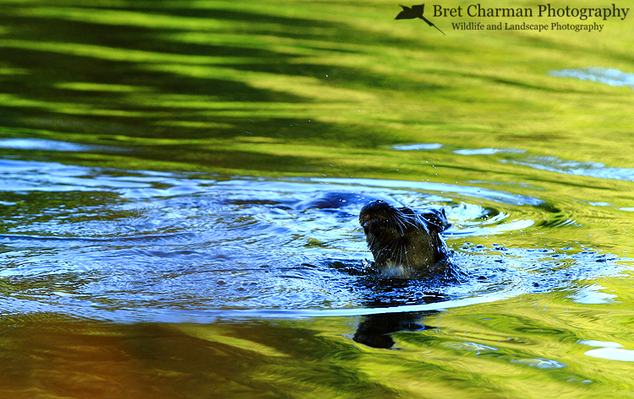 Otter, Lutra lutra It was hard to keep following an individual, the stream of bubbles were the only clue as to where they were underwater. However, when they teamed up it was nearly impossible to follow one. They seemed to be eating shellfish which they were collecting from the river bed, and then working them around in their mouth, eventually crushing them open. 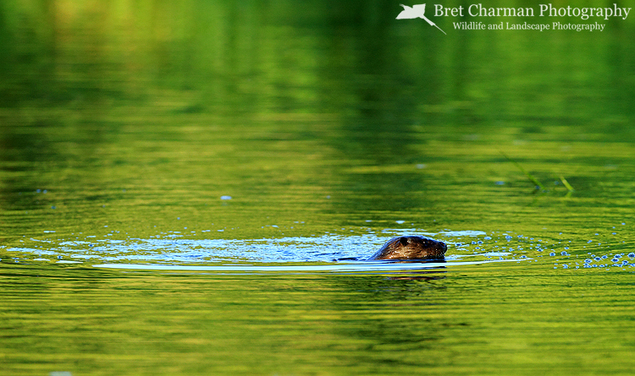 Otter, Lutra lutra Occasionally the Otters would appear in a patch of the river that was lit in the beautiful golden light. It was definitely a perfect morning but I really struggled to get the Auto Focus to lock on. I am not sure whether it was my poor technique (I have never photographed Otter before) or whether it was my camera acting up again but a week later I sent the camera in for another attempt at sorting out a whole host of AF issues. 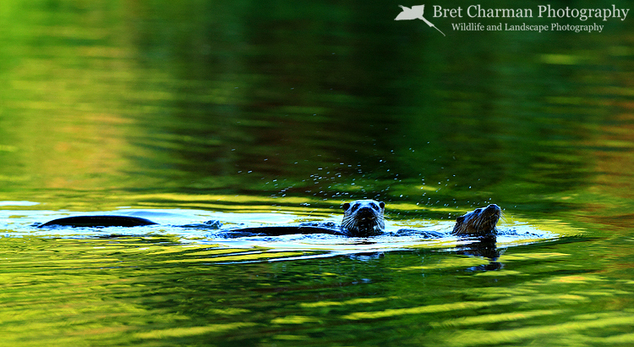 Otters, Lutra lutra It really was a magical morning, the light was surreal and the surrounding landscape created an idyllic scene. I was pretty tired by the time I got home but I was on such a high, to get so close to one of the most elusive creatures in the UK was an unforgettable moment for me. It is certainly one of those stand out moments in life when you think to yourself, did that really happen? And luckily for me it did happen and I can't wait to head down there again and make a day of it.
I have a few plans and I am going to try a more subtle approach next time, I now know a couple of scenting positions, where I think I might be able to pull off some wonderful shots. Considering I thought of this as more of a recce I couldn't be happier with the results of the day. |