
|
With the start of our trip to Mana Pools being so successful, particularly with the African wild dogs, the pressure was off and the whole group could just enjoy themselves. There is nothing better for me as a leader than knowing your group are happy after their first couple of days on safari. When I asked everyone what they wanted to focus on for the next few days, half the group said they would like to try their luck with the southern carmine bee-eater colony, while the other half wanted to keep following the dogs. I kept with the wild dog group to keep numbers nicely balanced and we had a brilliant time with the dogs. It took a little time to find the dogs this morning as they had moved some distance overnight. Nick Murray (our guide and the BBC’s Dynasties series guide) and I used our combined tracking skills to eventually find the dogs much further to the east. The pack had come across a small herd of zebra and decided that this was a good lesson for the pups. Zebra are not typical prey for these painted wolves, they focus their efforts on impala, but that is all part of the learning curve for young dogs. We watched them play with the zebra for 10 minutes or so before they went off at high speed after a herd of impala. Even in the vehicle we couldn’t keep up, such was their speed. When we eventually caught up with them, they had found a warthog and were desperately trying to catch it. However, every time they got close the warthog, which was a very healthy large male, he backed himself into a drainage culvert. 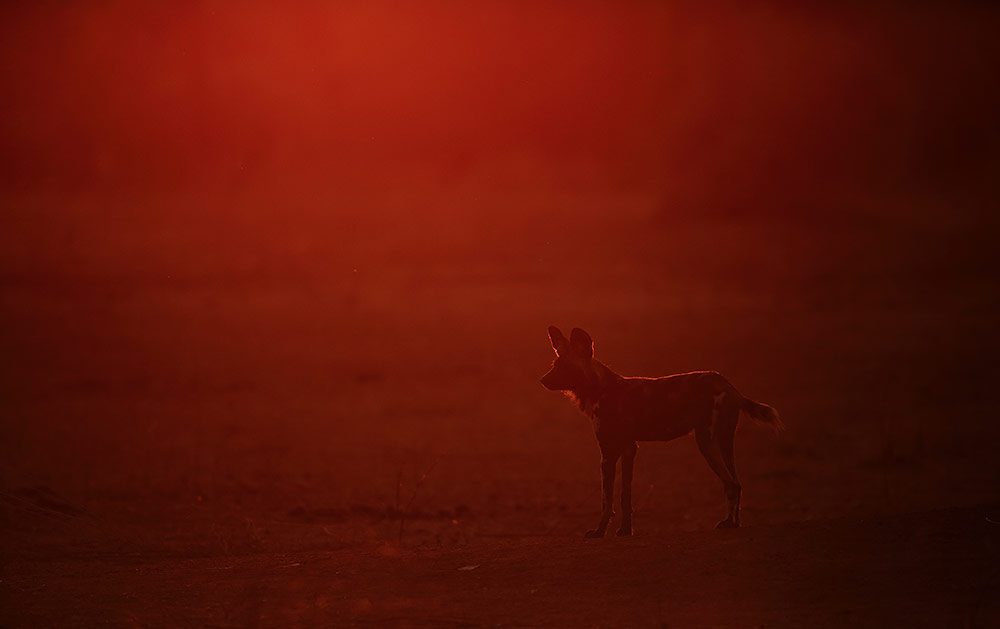 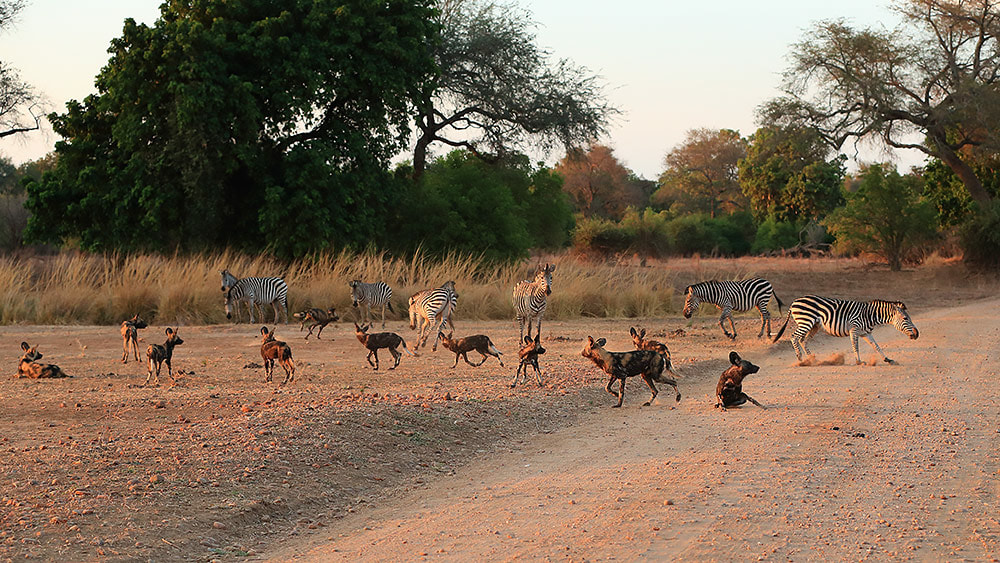 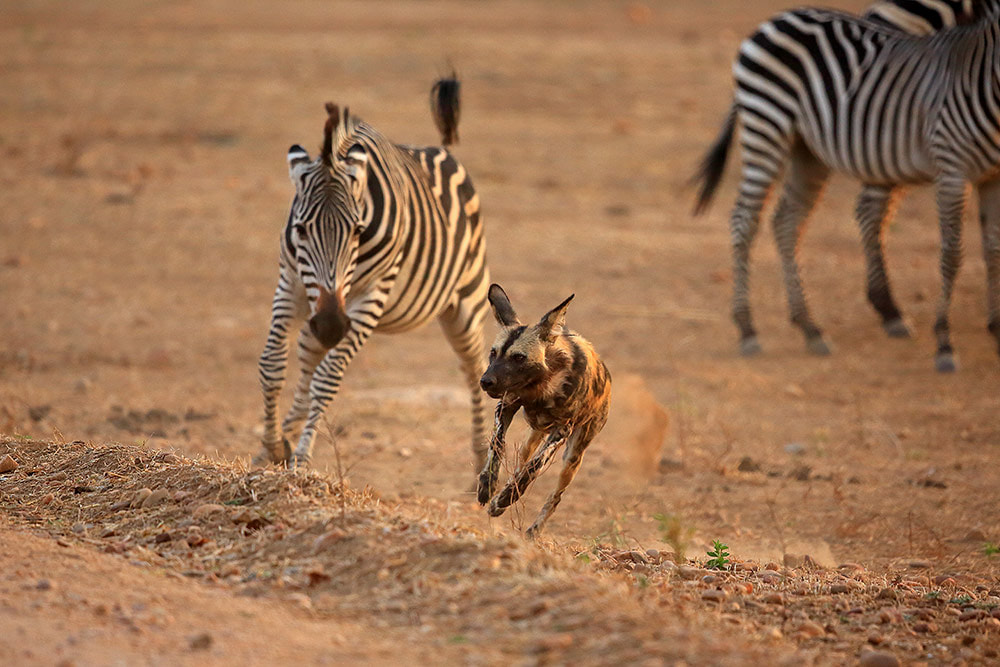 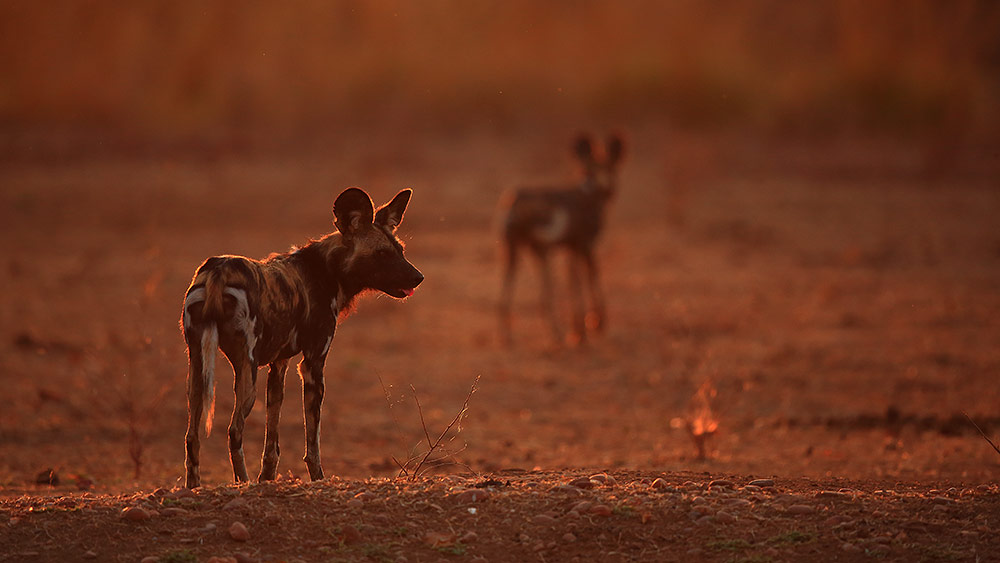 Eventually the pack gave up and just went about the daily routine of getting ready for their siesta. This is a great time to photograph the dogs as the sun is often still low in the sky, meaning you get some lovely rich light. At the same time, a large bull elephant appeared and started to browse the high branches of a fruiting sausage tree. We were truly blessed with some excellent photography. We also came across a small pride of lion just a hundred yards or so from where we had a breakfast stop on the banks of the Zambezi. 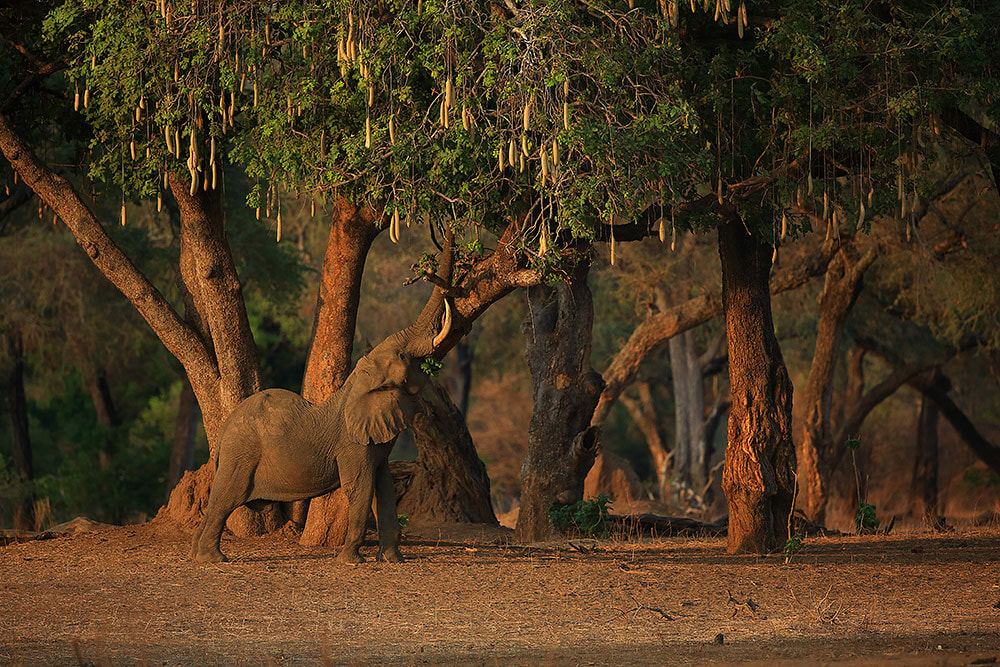 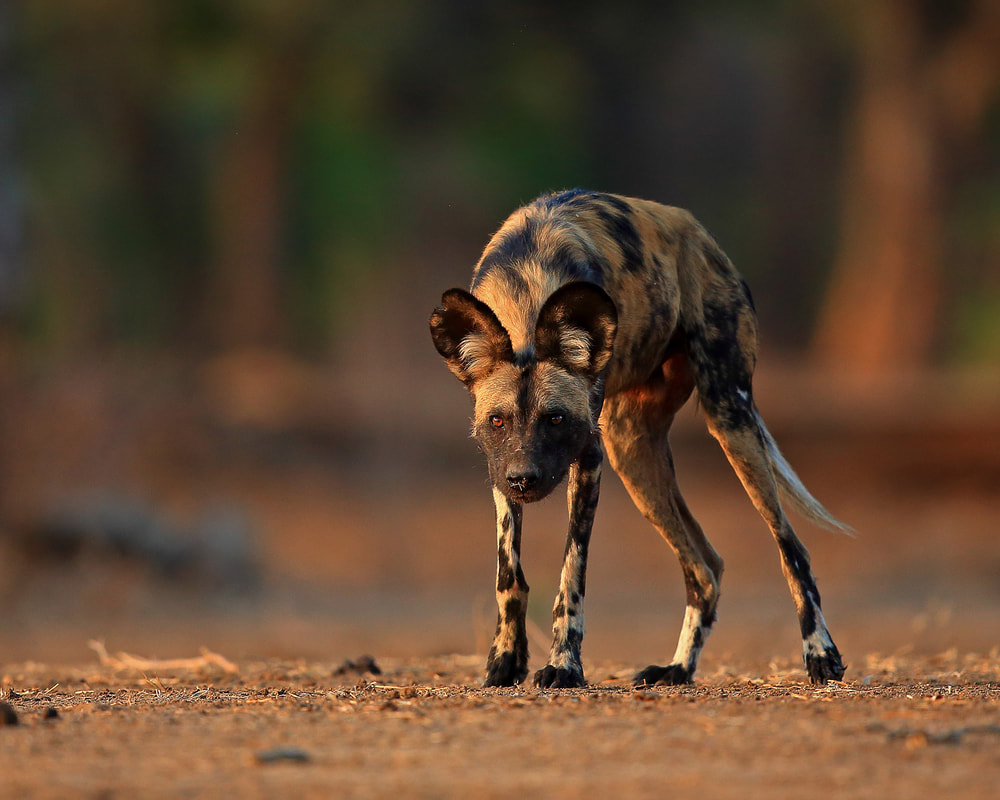 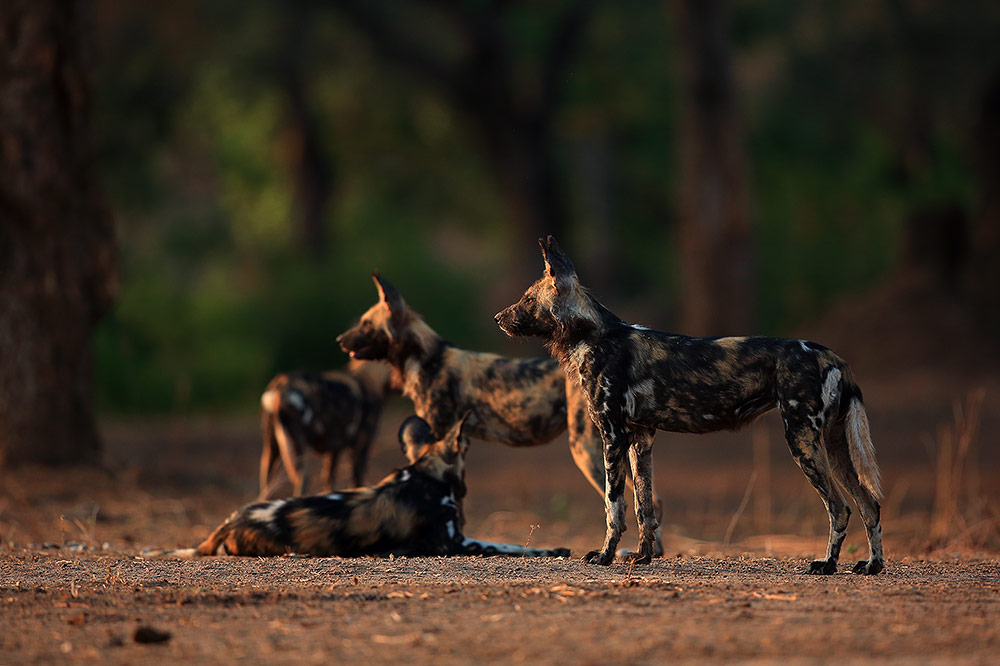 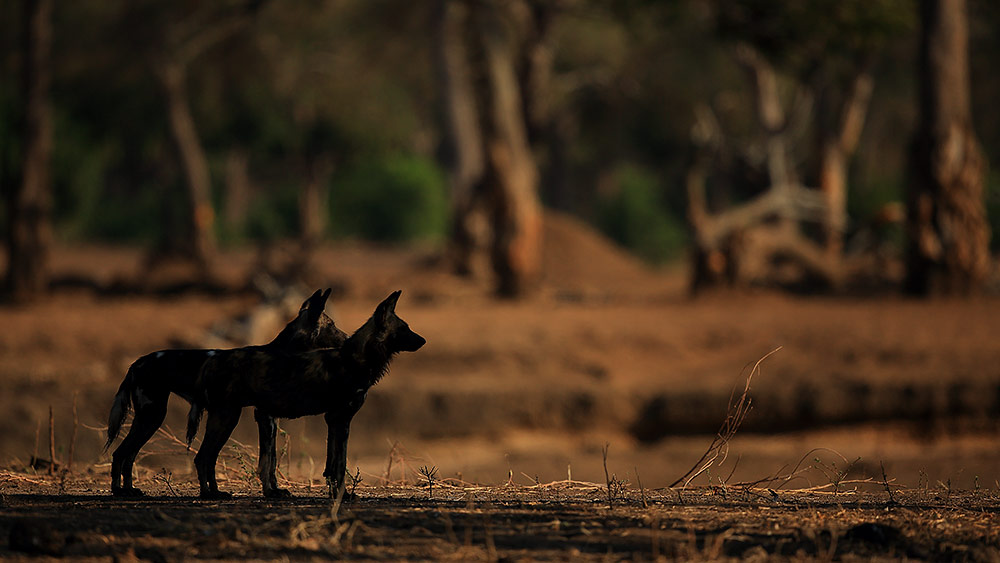 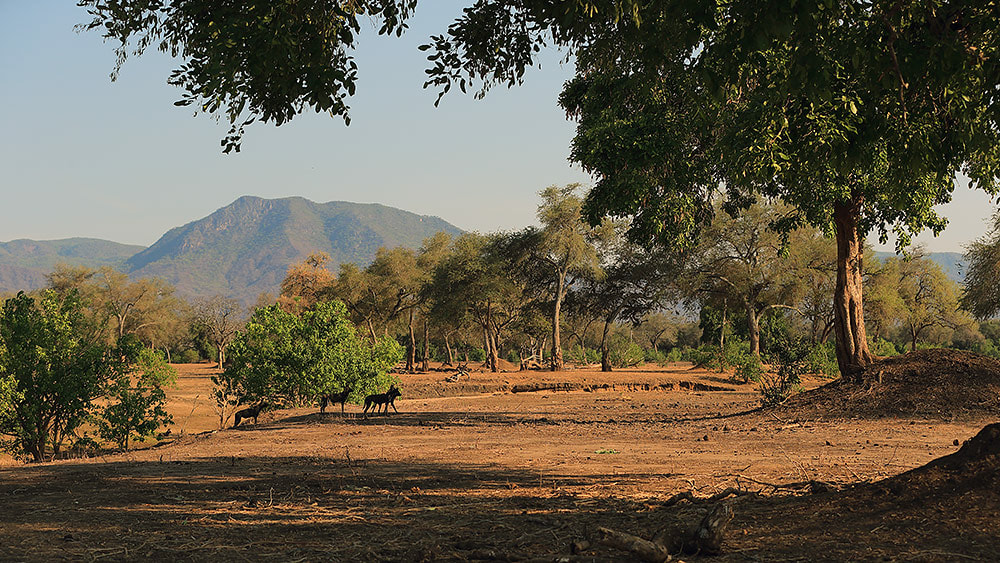 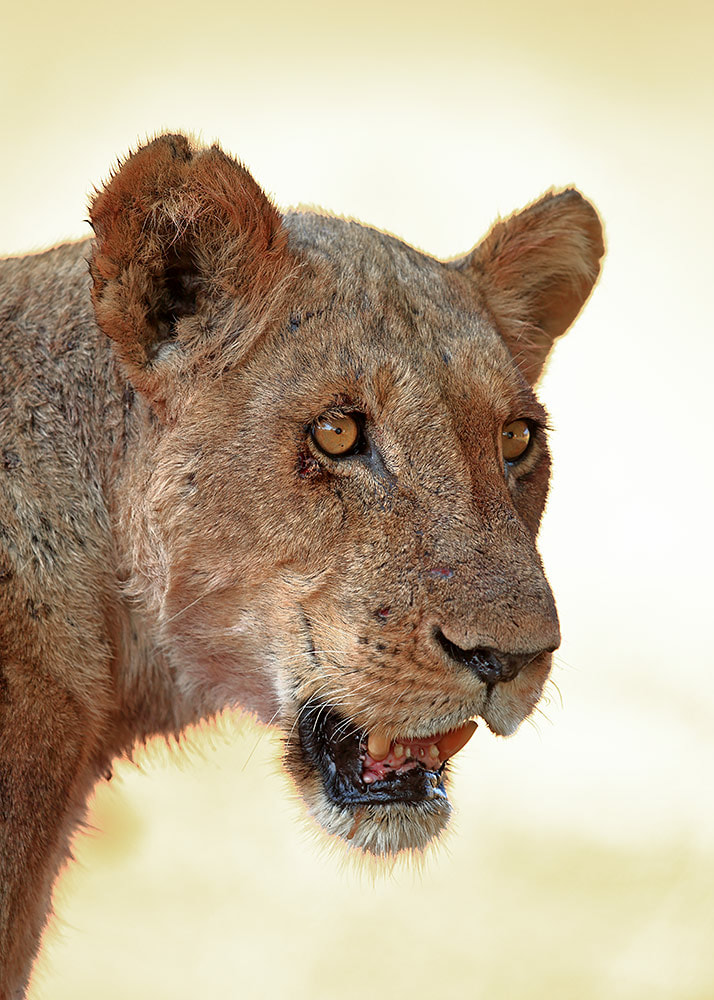 After a little while, all the dogs eventually crossed a drying pool and ended up resting in a shady dry gully, where the sandy soil was still moist with small pools of water. We found the dogs in the same spot in the afternoon before they suddenly got up, crossed one of the small pools and sprinted across the open plain towards the higher ground of the park. 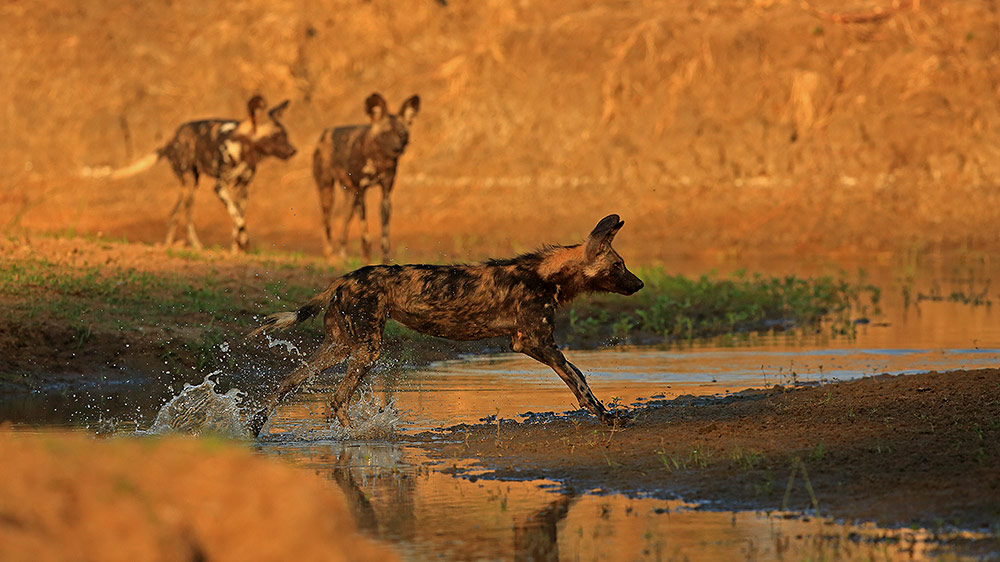 Above the floodplain the vegetation is radically different and we lost the dogs in the thick undergrowth. It was only the noise of the dogs on a kill that meant we were able to locate them in a dense thicket. The photography opportunities here were limited, but the proximity to the pack and their kill was incredible.
It all got rather exciting as the light started to fade. As we were watching the pack finish off the last scraps of the impala carcass, a small herd of elephants arrived on the scene. Within moments the elephants had the scent of the wild dogs and charged – the only issue was that we were between the two and we had to make a very speedy retreat and move back towards the vehicles. Our guides were absolutely excellent, keeping the group out of harms way without any hesitation or panic. Clear, calm and incisive commands kept us all safe with some heightened adrenaline levels.
0 Comments
|